
 Italiano
 English
 Français
 Deutsch
 Español



Circular Saw Blade Tooth Geometry: How to Choose the Right Tooth Shape
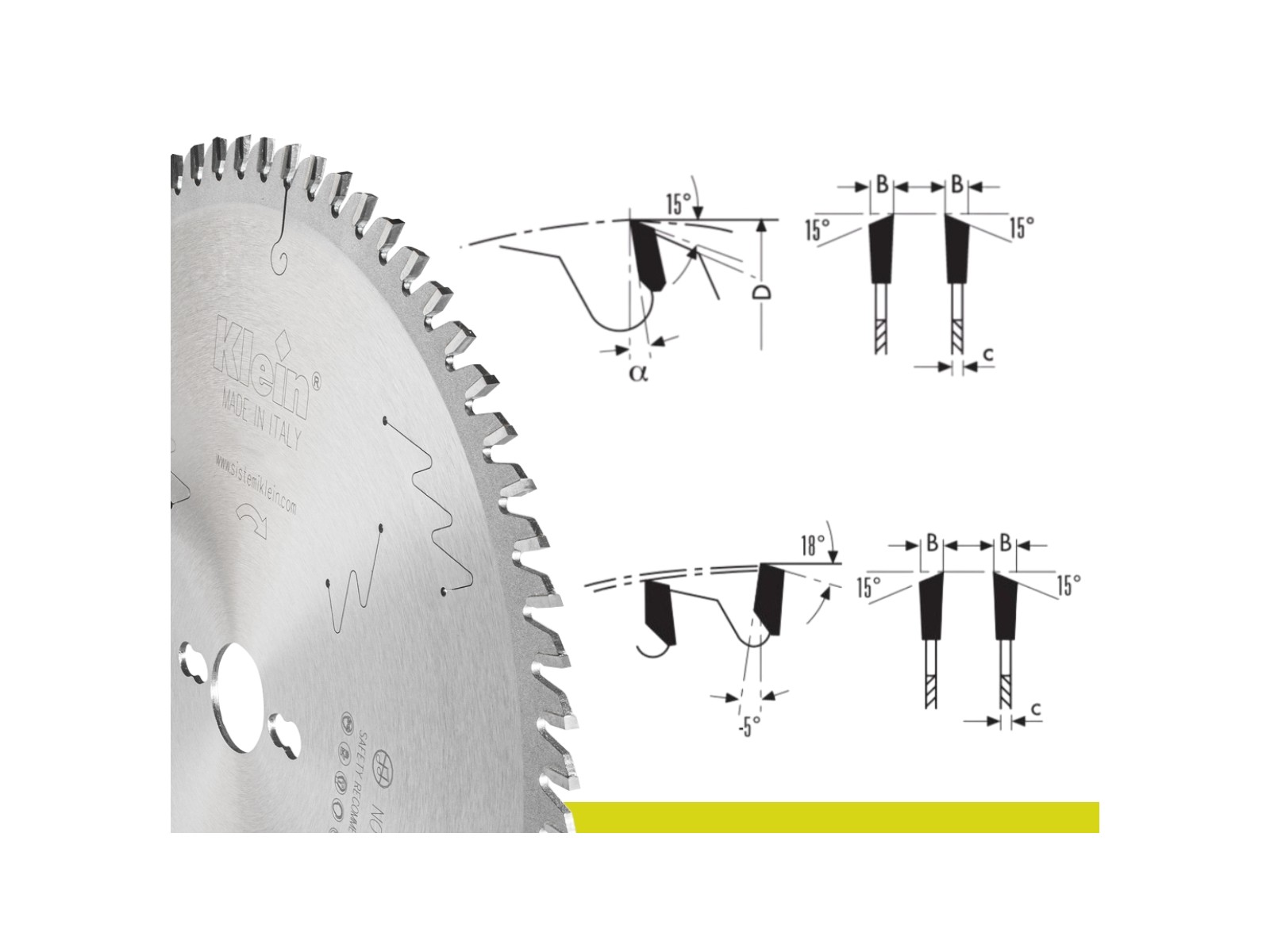
Choosing the right circular saw blade is not only a matter of diameter or number of teeth.
One of the most important factors affecting cutting performance is tooth geometry: the shape and arrangement of the teeth determine how the blade enters the material, removes chips and produces the finished cutting edge.
Different tooth profiles are designed for different materials and applications. A blade developed for ripping solid wood, for example, behaves very differently from one designed for cutting laminated panels, plastics or aluminium.
Understanding the main circular saw blade tooth geometries makes it easier to select the right blade and achieve cleaner cuts, improved productivity and longer tool life.
What Is Circular Saw Blade Tooth Geometry?
Tooth geometry refers to the shape, angle and configuration of the cutting teeth positioned around a circular saw blade.
Several characteristics work together to determine how the blade performs:
- Tooth shape
- Hook angle
- Tooth spacing
- Number of teeth
- Kerf width
- HW grade
- Sequence and arrangement of the teeth
- Other features such as reinforced tooth shoulders and more
The tooth geometry is designed to cut a specific material, sometimes on a particular machine.
For this reason, two circular saw blades with the same diameter and number of teeth can deliver two completely different cutting results.
Why Does Tooth Geometry Matter?
During cutting, each tooth must do its part, remove the correct amount of material and evacuate a precise amount of chip. A saw blade that works perfectly results in a flawless finish, with no burn marks or scratches on the wood.
The geometry of the tooth influences:
- Cut quality
- Cutting speed
- Chip evacuation
- Feed rate
- Resistance to wear
- Heat generation
- Splintering and tear-out
- Overall blade life
Tooth Geometry: The Core of Saw Blade Performance
There is no universal tooth geometry capable of delivering optimum results across every material and cutting condition.
Saw blade performance depends on the interaction between several technical parameters, including tooth profile, hook angles, number of teeth, kerf width, carbide grade and more. The tooth geometry parameters must be matched to the workpiece material, cutting direction, cutting height, machine status and feed rate.
The correct combination determines how the tooth engages the material, how cutting forces are distributed, how efficiently chips are evacuated and, ultimately, the quality and consistency of the cut.
It is precisely for this reason that Klein saw blades use certified micro-grain carbide teeth made by Ceratizit to provide a sharper edge and longer cutting life.
Tooth Angle
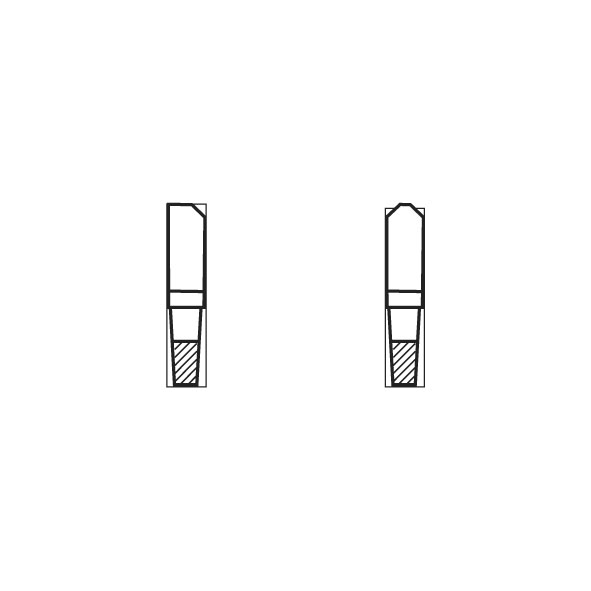
Positive or negative angle? It is essential to know the angle at which the tooth is welded to the saw blade body.
Let’s consider some examples:
- Positive angle: With a table saw or mitre saw, the saw blade’s teeth cut into the material from top to bottom, so a tooth with a positive angle is usually the correct choice.
- Negative angle: Plunge saws or cordless saws work by feeding the blade from different positions; for this reason, a negative angle is recommended to ensure a better finish and improved safety.
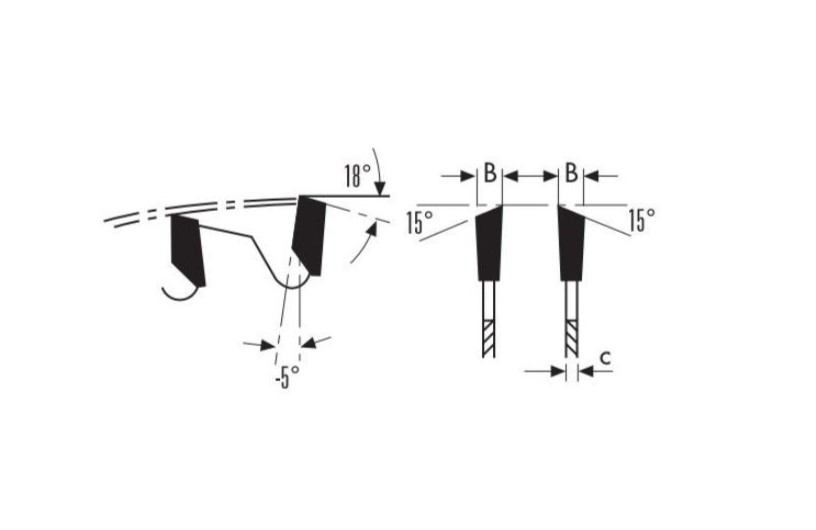
Example of a negative angle
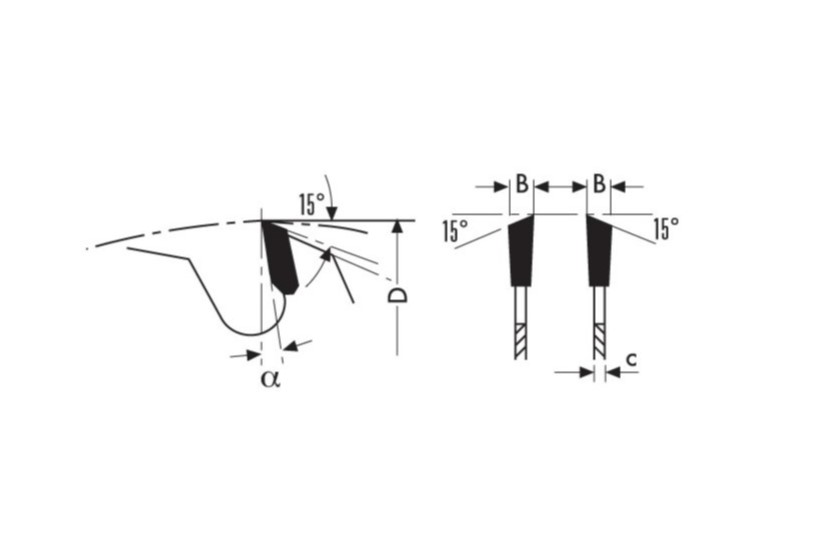
Example of a positive angle
Calculation of the Number of Teeth
Calculation of the number of teeth, given the diameter of the saw blade and the thickness of the material to be worked.
Z (nr. teeth) = (D × K) / Sp
D = diameter / mm
Sp = thickness / mm
K = 7 for ripping on natural wood
K = 9 for ripping or crosscutting
K = 11 for crosscutting of hardwoods and hard materials
Circular Saw Blade Tooth Geometry Overview
| Geometry | Tooth type | Main applications |
|---|---|---|
| WZ (ATB) | Alternate top bevel | Softwood, hardwood, MDF, fibre materials |
| FZ/TR (TCG) | Triple chip | Coated panels, laminates/bilaminates, chipboard, HPL, MDF, non-ferrous profiles, solid surface |
| FZ | Flat tooth | Ripping softwood and hardwood |
| HZ/DZ | Hollow / inverted V | Coated chipboard, fibre materials |
| FZ/FA | Flat tooth with bevel + chip limiter | Timber, difficult cutting conditions |
| LFZ | Flat tooth + chip limiter | Table saws, ripping and crosscutting |
| KON/FZ | Conical tooth | Scoring blades |
| WZ/FA | Alternate top bevel | Wood, MDF, fibre materials |
| TR | Trapezoidal tooth | Dry-cut saw blades |
| ES-L / ES-R | One-sided bevel | Edge banding and hogging |
| BW / C | Special profiles | Metal cutting |
Klein Sawblades Tooth Geometry
WZ (ATB) – Alternate Top Bevel
WZ, internationally known as ATB – Alternate Top Bevel, features teeth bevelled alternately to the right and left. Its alternating cutting action helps produce especially clean cuts, making it one of the most versatile geometries for woodworking applications.
This geometry is particularly suitable for:
- Softwood
- Hardwood
- Chipboard
- MDF
- Plywood
- Frames
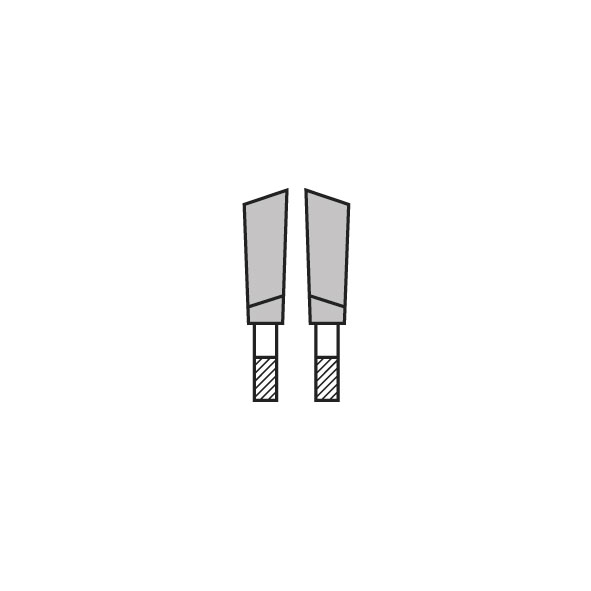
FZ/TR (TCG) – Triple Chip Grind
FZ/TR, also known as TCG – Triple Chip Grind, combines trapezoidal and flat teeth in an alternating sequence. The combination of the two tooth shapes distributes the cutting action and makes this geometry particularly effective when machining demanding or coated materials.
It is suitable for cutting:
- Laminates / bilaminates
- Plastic-coated panels
- HPL
- MDF and chipboard panels
- Plastic materials, plexiglass and PVC
- Non-ferrous metals such as aluminium, zinc and light alloys
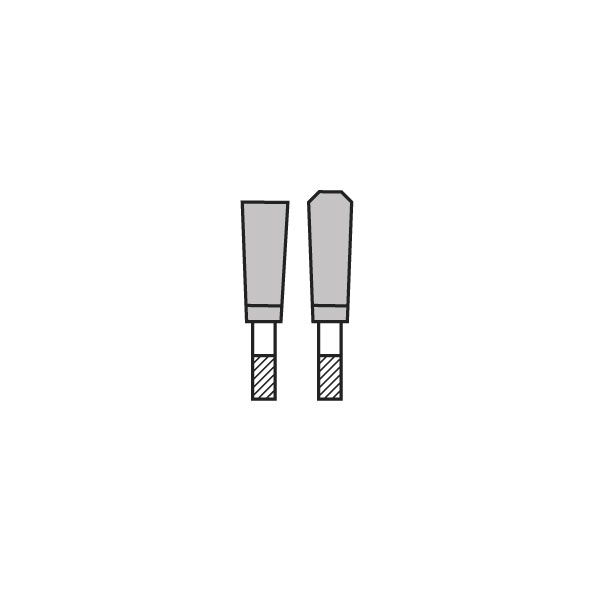
FZ – Flat Tooth
FZ features a flat cutting edge and is designed primarily for cutting along the grain. The strong, simple tooth profile allows efficient material removal during longitudinal and ripping cuts.
It is especially suitable for:
- Softwood
- Hardwood
- Ripping applications
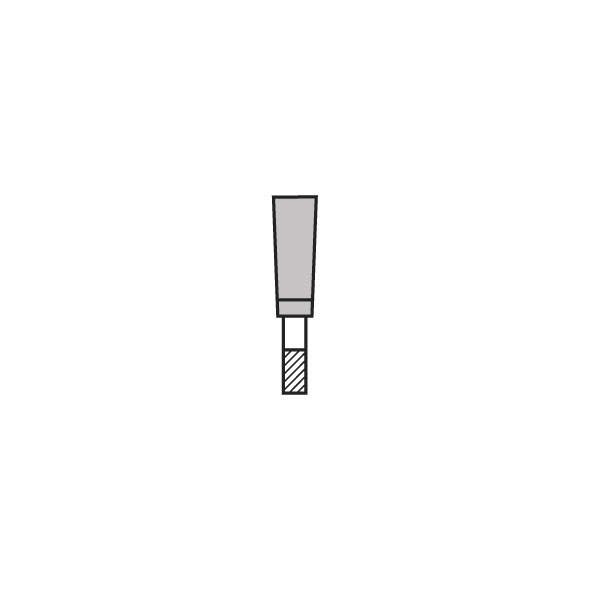
HZ/DZ – Hollow Tooth / Inverted V-Tooth
This particular geometry combines a hollow tooth with an inverted V-shaped tooth. It is therefore a more specialised solution than conventional ATB or flat-tooth geometries.
This specialised geometry is designed for squaring saws and vertical panel sizing machines, such as Putsch Meniconi or Striebig vertical panel saws, and is particularly suitable for cutting panels without using scoring saw blades:
- Plastic-coated chipboard
- Laminated MDF
- Bilaminated panels
- Plywood
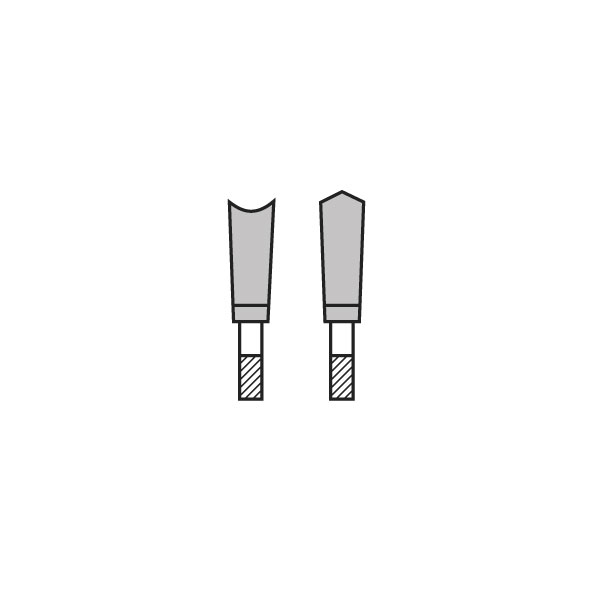
FZ/FA – Flat Tooth with Bevel and Chip Limiter
FZ/FA combines a flat tooth with a bevel and a chip limiter. This geometry is therefore intended for applications where cutting conditions may be particularly severe, such as on building sites or similar environments.
It is designed for demanding timber-cutting applications, including:
- Wood with nails and screws
- Lumber
- Firewood
- Softwood, hardwood and OSB
- Shuttering board
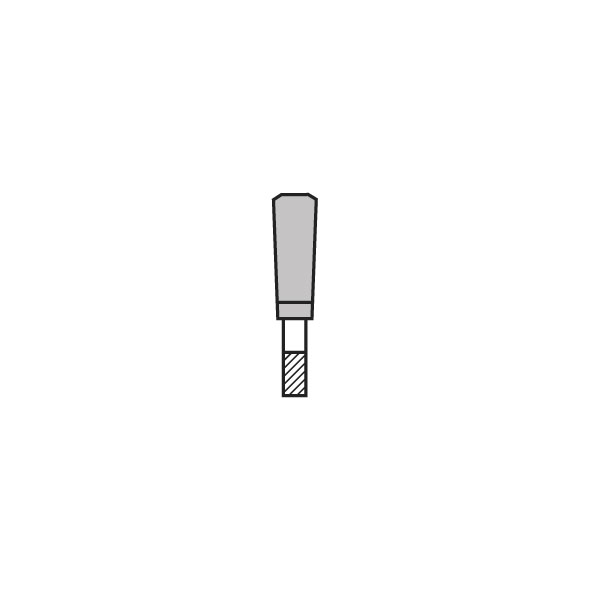
LFZ – Flat Tooth with Chip Limiter
LFZ is another flat-tooth geometry equipped with a chip limiter. It is made specifically for adjustable scoring saw blades to be used on squaring saws and table saws to score the coating of panels.
- Double-sided veneer
- Laminated chipboards
- Laminated MDF
- Plywood
KON/FZ – Conical Tooth
KON/FZ is the geometry used on scoring blades.
The conical tooth allows the scoring blade to create a preliminary cut before the main blade enters the panel, helping to achieve a cleaner result on coated materials.
It is made specifically for scoring saw blades used on squaring saws and horizontal panel sizing / beam saw machines to score panel coatings.
- Laminated chipboards
- Laminated MDF
- Bilaminated panels
- Plywood
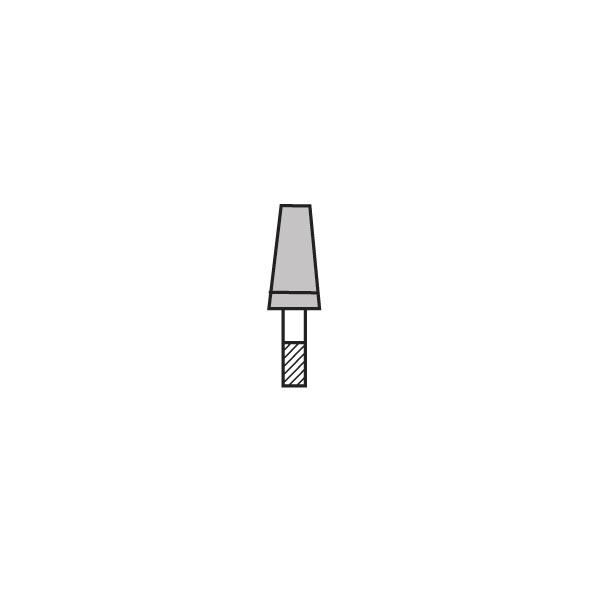
WZ/FA – Alternate Top Bevel
WZ/FA is an alternate top bevel tooth geometry designed for special saw blades.
- Plastic, plexiglass and PVC
- Plastic-coated materials
- Fibre materials
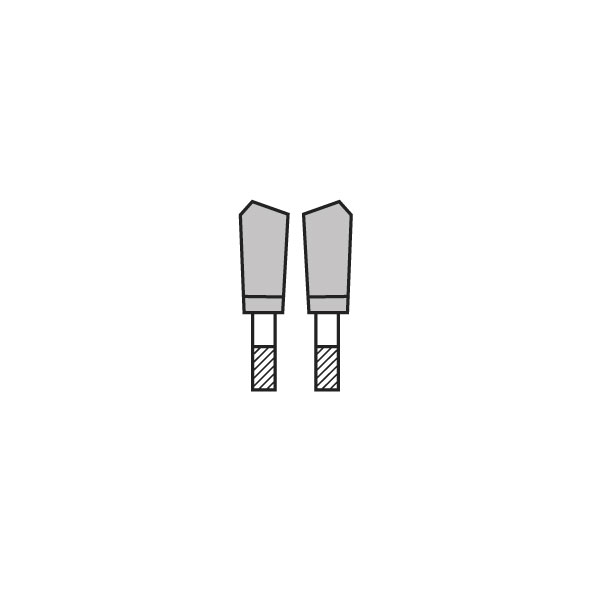
TR-0° – Trapezoidal Tooth
TR is a trapezoidal tooth with chamfer and is used on Klein “dry” saw blades, identified in the catalogue as the LZ saw blade range.
“QUATTRO” refers to the four types of materials that can be cut with these multipurpose saw blades: wood, ferrous and non-ferrous metals, plastics and compound or composite materials.
- Softwood and hardwood
- Aluminium
- Steel and ferrous profiles
- Laminate and double-sided laminate
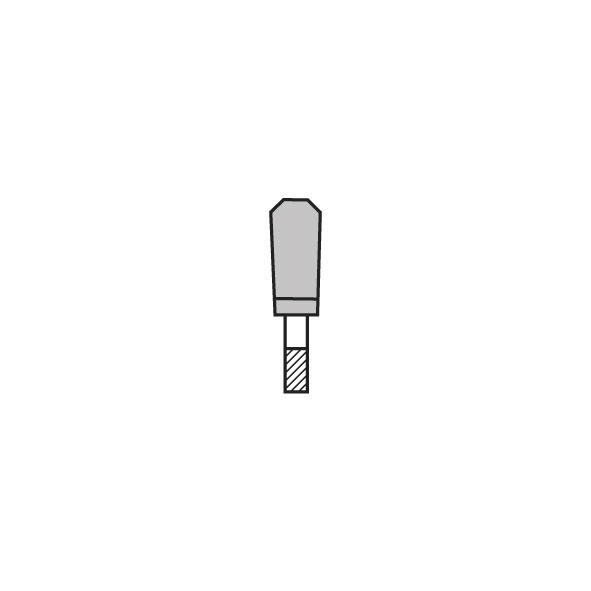
ES / ES-L / ES-R – One-Sided Top Bevel
The ES geometry uses a one-sided top bevel, available in right-hand or left-hand versions:
- ES-L
- ES-R
This tooth shape is used primarily on edge banding machines and hogging units.
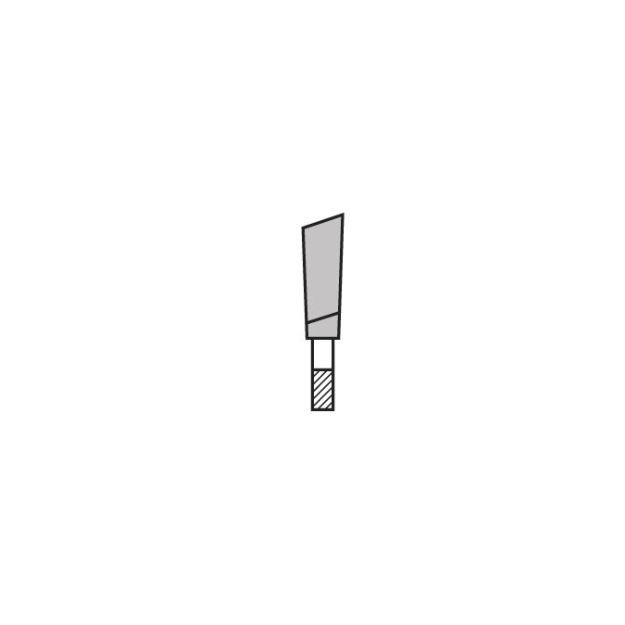
BW and C – Special Tooth Geometries for Metal Cutting
The Klein range also includes specialised tooth profiles for steel saw blades.
BW Tooth
Special tooth geometry used on Item PB. The BW tooth form is suitable for cutting thinner-walled steel pipes.
C Tooth
Special tooth geometry used on Item PA. The C tooth form is suitable for solid or thick-walled steel pipes (>3 mm).
From Tooth Geometry to Cutting Performance
Choosing the right circular saw blade means looking beyond diameter and tooth count. Tooth geometry must work together with the material, machine, cutting direction and operating parameters to achieve the required balance between cutting quality, productivity and tool life.
With decades of experience in professional cutting tools, Klein® produces circular saw blades for a wide range of woodworking and industrial applications, combining carefully selected tooth geometries, premium carbide grades and application-specific blade configurations.
Explore our range of professional circular saw blades or contact our technical team to find the most suitable solution for your application.
Your job, our tools.